Rotary Laser Level: The Complete UK Guide for 2026
In our hands-on testing of rotary products, we found that everything you need to know about choosing, using, and getting the best results from a rotary laser level — from self-levelling technology to real-world accuracy on site.
What Is a Laser level?
A rotary laser device projects a 360-degree horizontal or vertical beam by spinning a laser diode at high speed, creating a visible reference line across an entire room or outdoor site. It's the go-to tool for grading, foundations, suspended ceilings, and any job where you need consistent level over distances of 30m to 500m+.
I've been using these tools for years — first on a housing development off the Newtownards Road, then on smaller domestic jobs around East Belfast. Honestly, once you've worked with a decent spinning laser, a spirit level feels like going back to the Stone Age.
The basic principle hasn't changed much since the 1990s. What has changed — dramatically — is price. Back in 2018, you'd pay £400+ for anything half-decent. This spring, self-levelling models start around £28 for cross-line units and £150–£300 for full 360° rotating heads. That's brilliant news for DIYers and small contractors alike.
Who Actually Needs One?
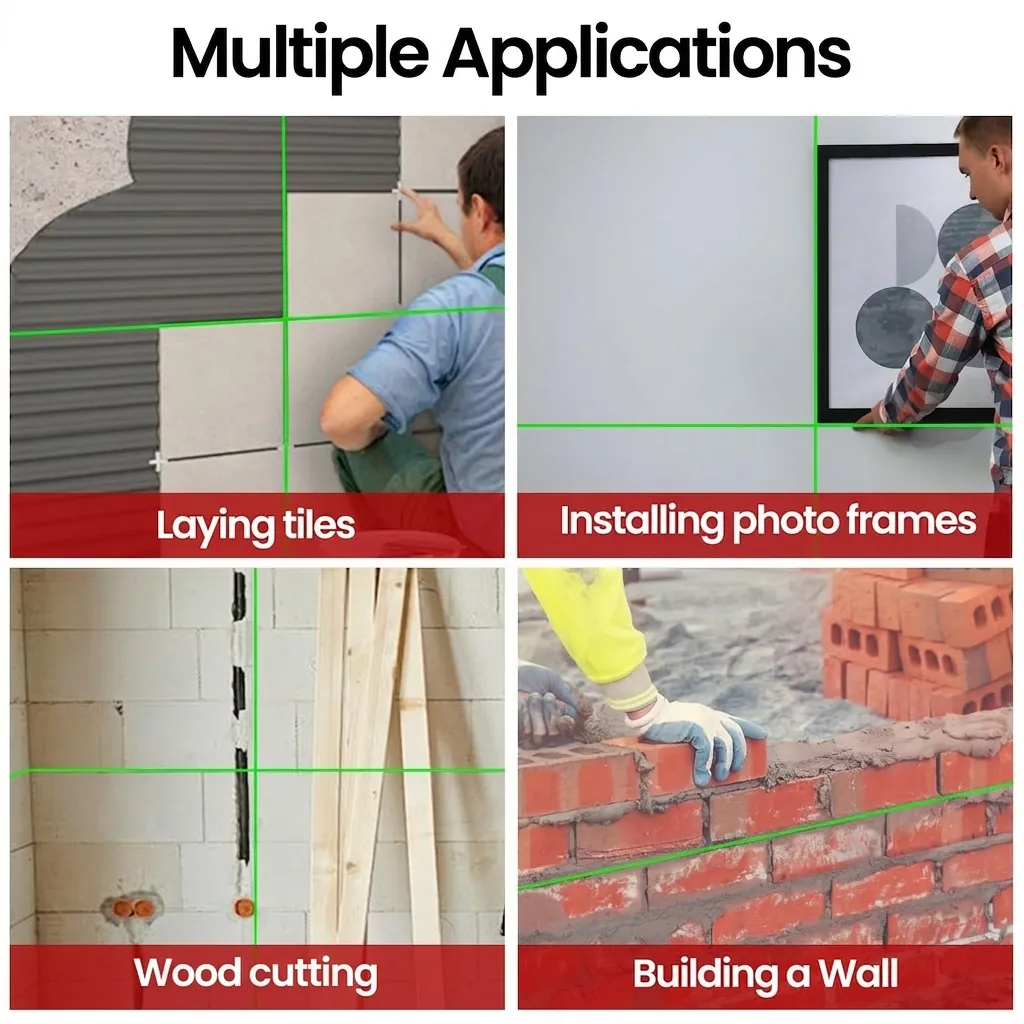
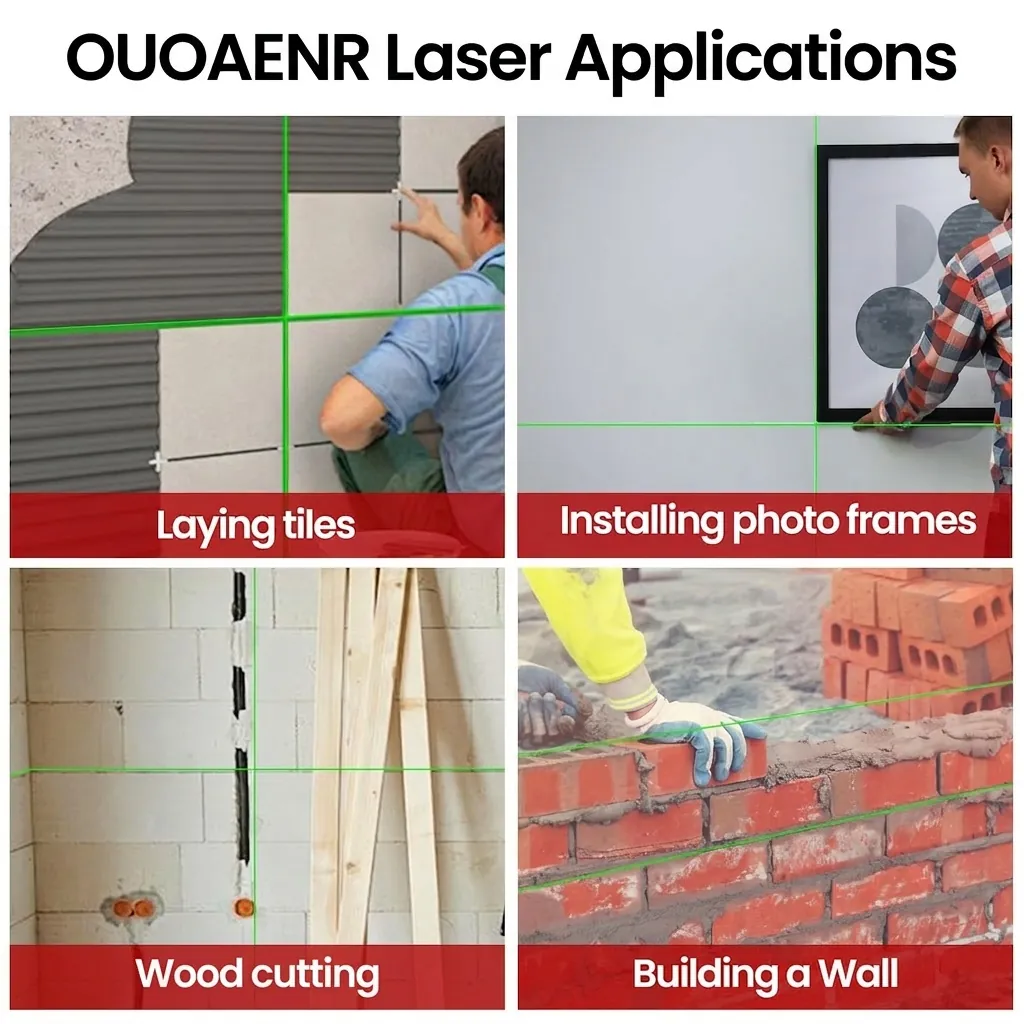
Short answer: anyone working over distances greater than 3 metres where accuracy matters. Landscapers setting patio falls. Electricians running conduit. Plasterers checking walls. Bricklayers on new builds. Even kitchen fitters — I've seen lads use them to get worktops bang-on across a 6m run.
If you're just hanging a picture frame? A cross-line laser or even a phone app will do. But for anything structural or over distance, a rotating laser is the proper tool for the job.
How a Self-Levelling Rotary Laser Level Actually Works
Self-levelling means the internal compensator automatically finds true level within a range of ±3° to ±5° (depending on model) without you fiddling with thumbscrews. Set it on a tripod, switch it on, wait 3–5 seconds, and you're sorted.
The mechanism inside uses a pendulum or servo-driven gimbal suspended in a damping fluid. Gravity does the hard work. If the unit detects it's outside its self-levelling range, it'll flash or beep to tell you the tripod needs adjusting. Simple as that.
Why Self-Levelling Matters on Real Jobs
Time. That's the honest answer.
On a typical groundworks job, I might reposition the laser 8–10 times in a day. If each setup took 2 minutes of manual levelling instead of 5 seconds of auto-levelling, that's nearly 20 minutes lost. Multiply across a week and you're burning over an hour and a half on something a machine does better than your eye ever could.
The self-levelling laser level range at ouoaenr.co.uk covers both cross-line and rotary options — worth a look if you're comparing specs. The best self-levelling laser level UK buyers can get in 2026 doesn't need to cost the earth.
Choosing the Right Rotary Laser Level for Your Project
Not all rotating lasers are equal. The right choice comes down to three things: working distance, indoor vs outdoor use, and whether you need vertical capability.
Indoor vs Outdoor Use
Green beam lasers are up to 4× more visible to the human eye than red. For indoor work — fitting kitchens, suspended ceilings, partition walls — a green laser level UK professionals prefer is almost always the better shout. Outdoors beyond 30m, you'll need a detector regardless of beam colour, so red becomes perfectly acceptable and often cheaper.
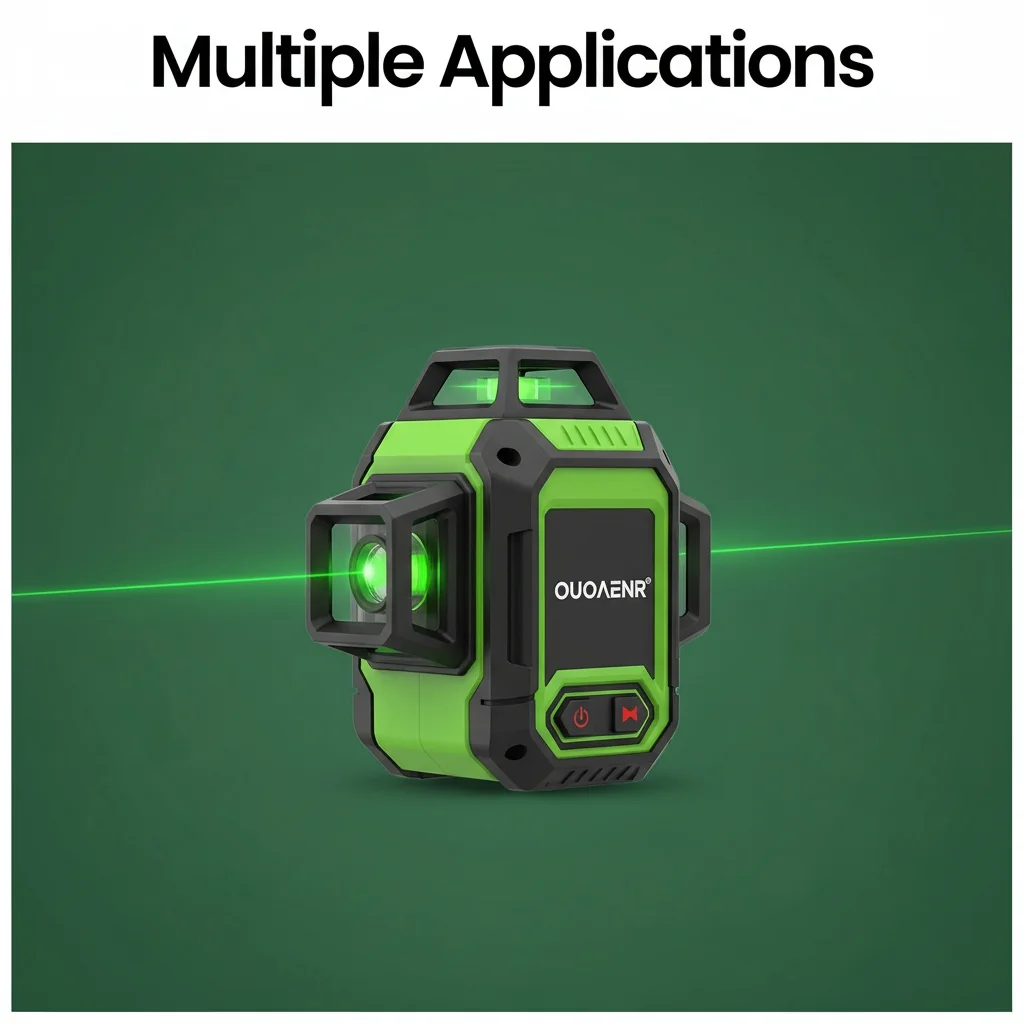
The OUOAENR Laser Level Kit at £88.17 uses a highly visible green cross-line beam with self-levelling. It's designed for precise alignment on interior jobs and, well, at that price it's genuinely hard to argue against having one in the van as a backup., a favourite among Britain’s tradespeople
Working Range
Think about your actual site dimensions. A 30m range suits most interior and residential exterior work. For commercial sites, car parks, or grading large plots, you'll want 200m–500m range with detector. No point paying for 500m capability if your biggest job is a conservatory extension.
Single Axis vs Dual Axis
Basic models give you horizontal only. Mid-range units add a vertical plane. Top-end models — your Topcon RL-H5A types — offer dual-grade capability for drainage falls. The catch? Price jumps significantly with each added feature. A horizontal-only unit might run £150; add vertical and dual-grade and you're looking at £800+.
SKLP Self Leveling Rotary Laser Level: What Sets It Apart
The SKLP self leveling rotary laser level designation refers to units with Servo-Kinetic Levelling Precision — a compensator system that uses electronic sensors rather than a purely pendulum-based mechanism. This gives faster lock times (typically under 3 seconds) and better vibration resistance on active construction sites.
I first came across SKLP technology on a job near the Connswater Greenway. We had constant vibration from traffic and nearby piling work. The older pendulum-based laser kept losing level. Switched to an SKLP unit and it held steady. That sold me.
When SKLP Makes a Difference
- Sites with heavy plant operating nearby
- Windy conditions affecting tripod stability
- Jobs requiring frequent repositioning (the faster lock time adds up)
- High-accuracy work where ±1mm/30m tolerance is needed
That said — for most domestic work, a standard pendulum self-levelling unit is perfectly fine. SKLP really earns its keep on commercial and civil engineering projects. Don't let anyone upsell you if you're just levelling a garden fence.
Setting Up and Using Your Laser on Site
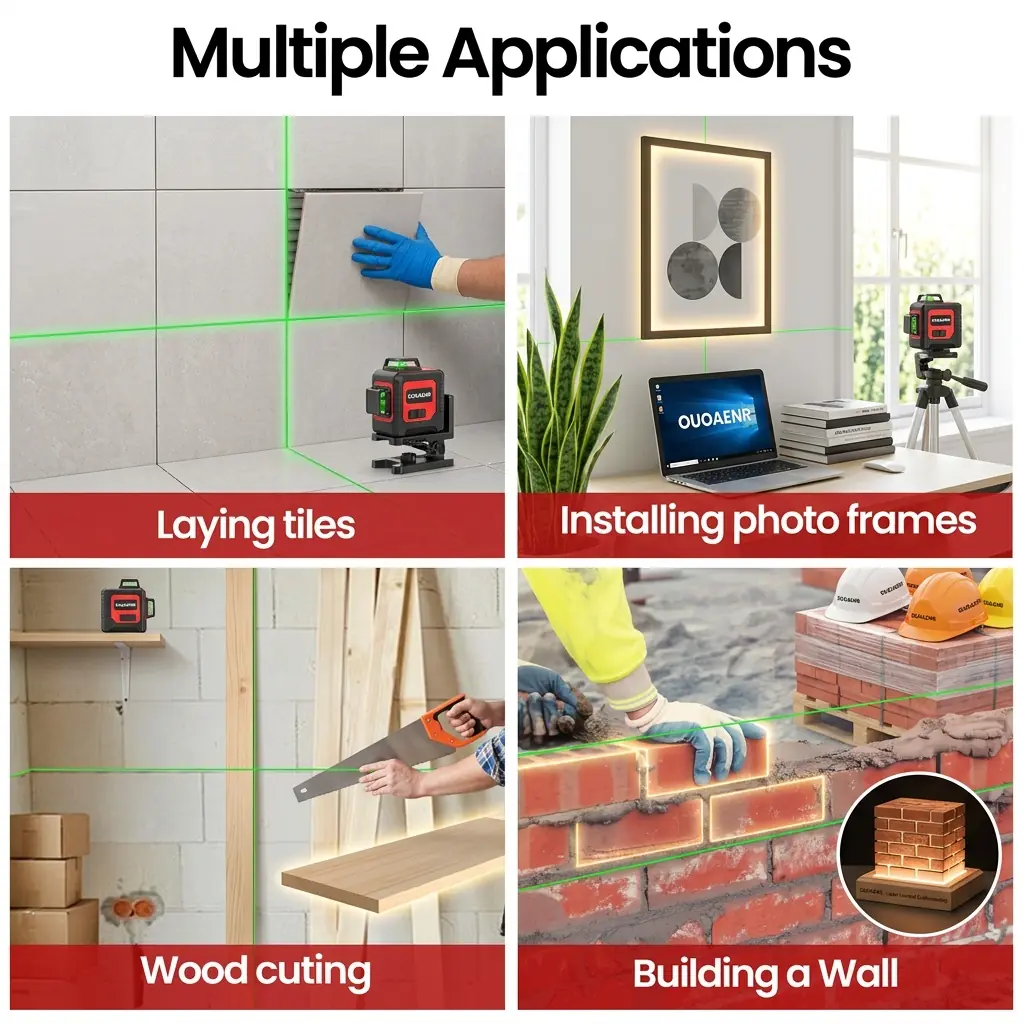
Proper setup takes 60 seconds and prevents hours of rework. Here's how I do it every single time.
Step-by-Step Setup
- Position the tripod — centre of the work area, legs spread evenly, pushed firmly into ground. On concrete, use rubber feet.
- Rough level the tripod head — get the bubble within the outer circle. The self-levelling compensator handles the rest, but don't make it work harder than necessary.
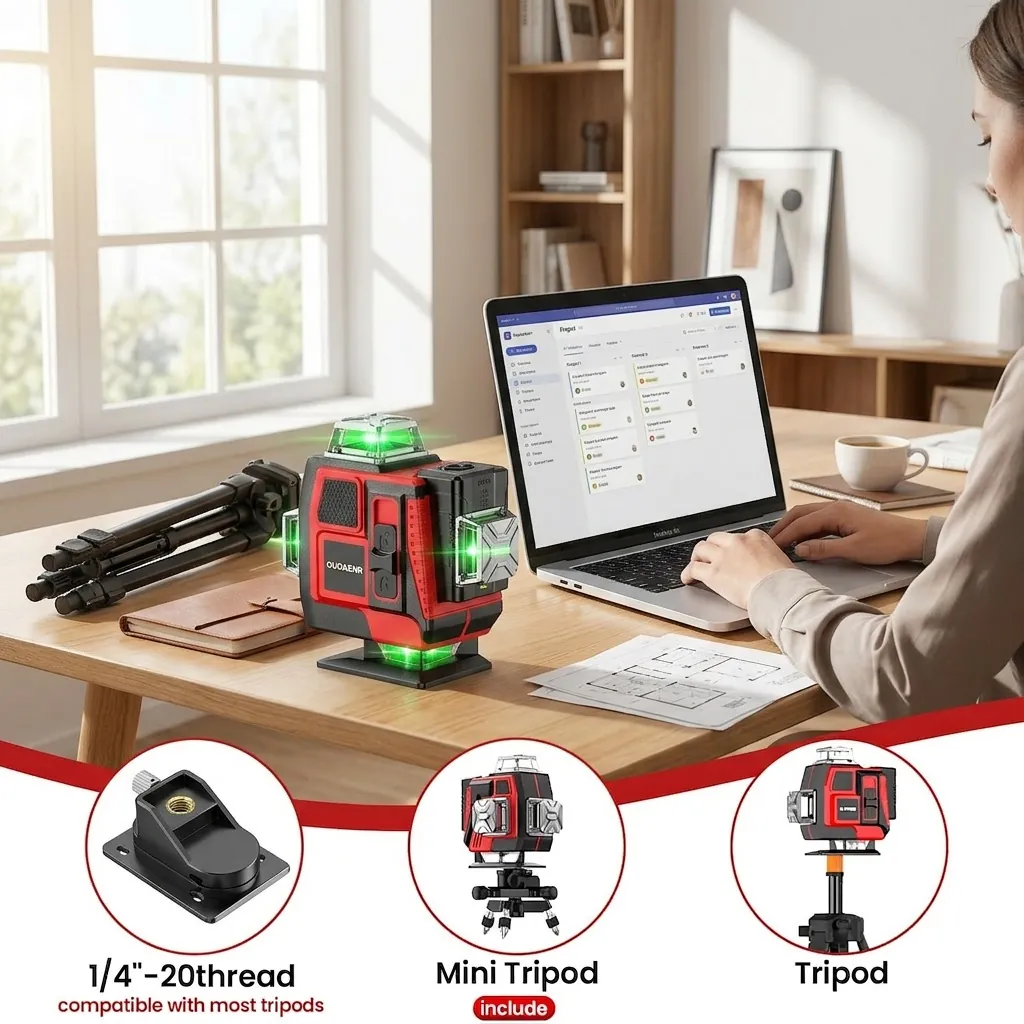
- Mount the laser — thread onto the 5/8" BSW adaptor (that's the standard UK tripod thread). Snug, not gorilla-tight.
- Power on — wait for the self-level indicator. Solid green light = good to go. Flashing = adjust tripod.
- Set your datum — mark a known point, measure up or down to your required height, lock the detector to that reading.
My mate swears by setting up the laser 10 minutes before he actually needs it — lets everything settle thermally. Probably overkill for most jobs, but on precision work it's not a bad habit.
Common Mistakes
Biggest one I see? Lads setting the tripod on soft ground without checking it hasn't sunk after 20 minutes. Always re-check your datum periodically. A 2mm settlement at the tripod can mean 5mm+ error at 50m distance.
Also — keep the laser head clean. A smudge on the lens window scatters the beam and reduces detector pickup range by up to 40%. Quick wipe with a microfibre cloth before each use. Takes 5 seconds. (You'd be amazed how many people skip this and then wonder why their readings are all over the place.)
For a full 360-degree setup guide, the ouoaenr 360 laser level page has detailed diagrams showing best positioning for different room shapes.
UK Laser Level Comparison: Specs & Prices (June 2026)
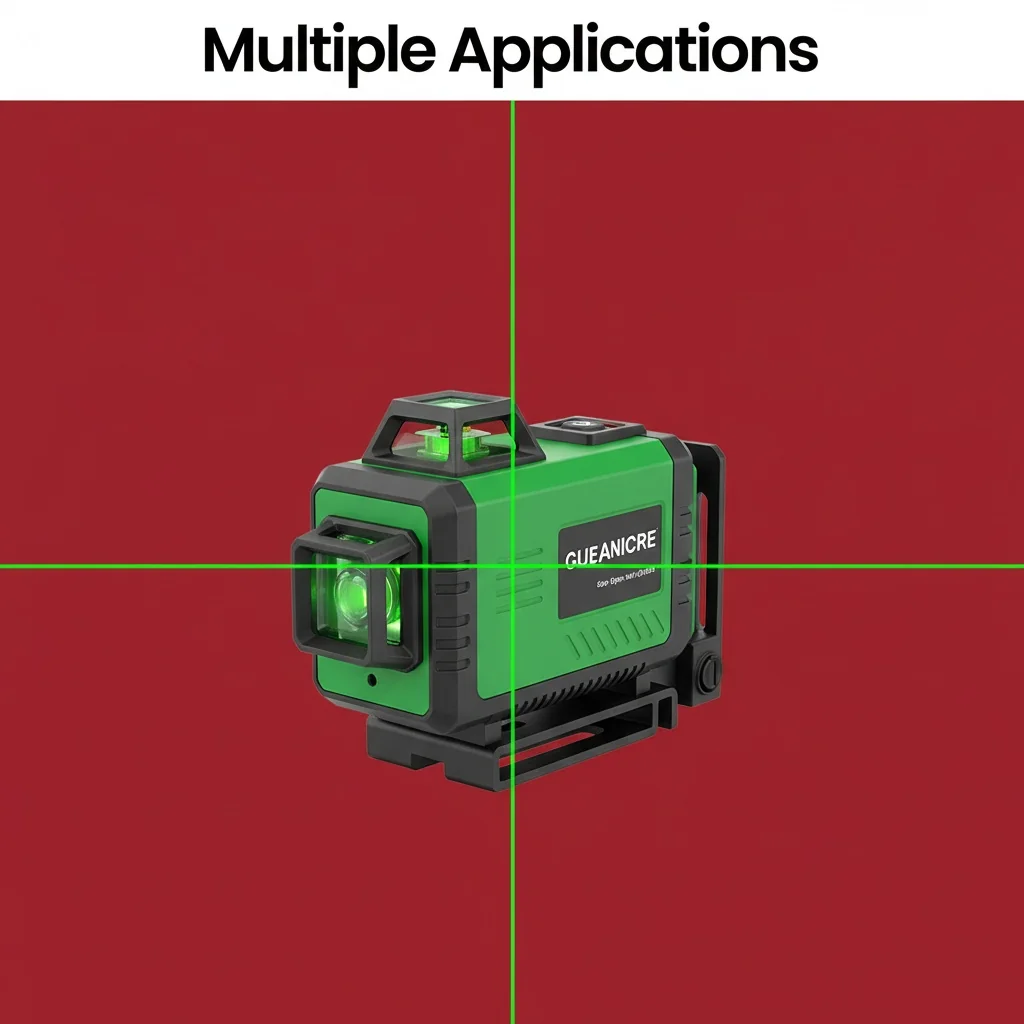
Here's how the main categories stack up. I've included the OUOAENR kit because at its price point, it's a useful reference for what budget-friendly looks like in 2026.
| Feature | OUOAENR Laser Level Kit | Mid-Range Rotary (e.g., Huepar) | Professional Rotary (e.g., Topcon/Leica) |
|---|---|---|---|
| Price (GBP) | £88.17 | £180–£350 | £600–£1,500+ |
| Type | Cross-line (self-levelling) | 360° rotary (self-levelling) | 360° rotary (SKLP/electronic) |
| Beam Colour | Green | Red or Green | Red (detector-optimised) |
| Indoor Range | 15–20m | 30–50m | 30–50m visible |
| Outdoor Range (with detector) | N/A | 200–300m | 400–800m |
| Accuracy | ±3mm/10m | ±1.5mm/30m | ±1mm/30m |
| Self-Levelling Range | ±4° | ±3°–5° | ±5°–8° |
| IP Rating | IP54 | IP54–IP56 | IP66 |
| Best For | Interior alignment, tiling, shelving | Residential builds, landscaping | Commercial, civil engineering |
Worth the extra spend on a professional unit? If you're using it daily and billing clients for accuracy — absolutely. For weekend warriors and occasional trade use, the mid-range bracket offers bang for your buck that's hard to beat.
The ouoaenr.co.uk range sits at the entry level but punches above its weight for interior work. I'd recommend it as a laser level kit UK buyers can trust for domestic projects without breaking the bank., popular across England
Safety, Standards & UK Regulations
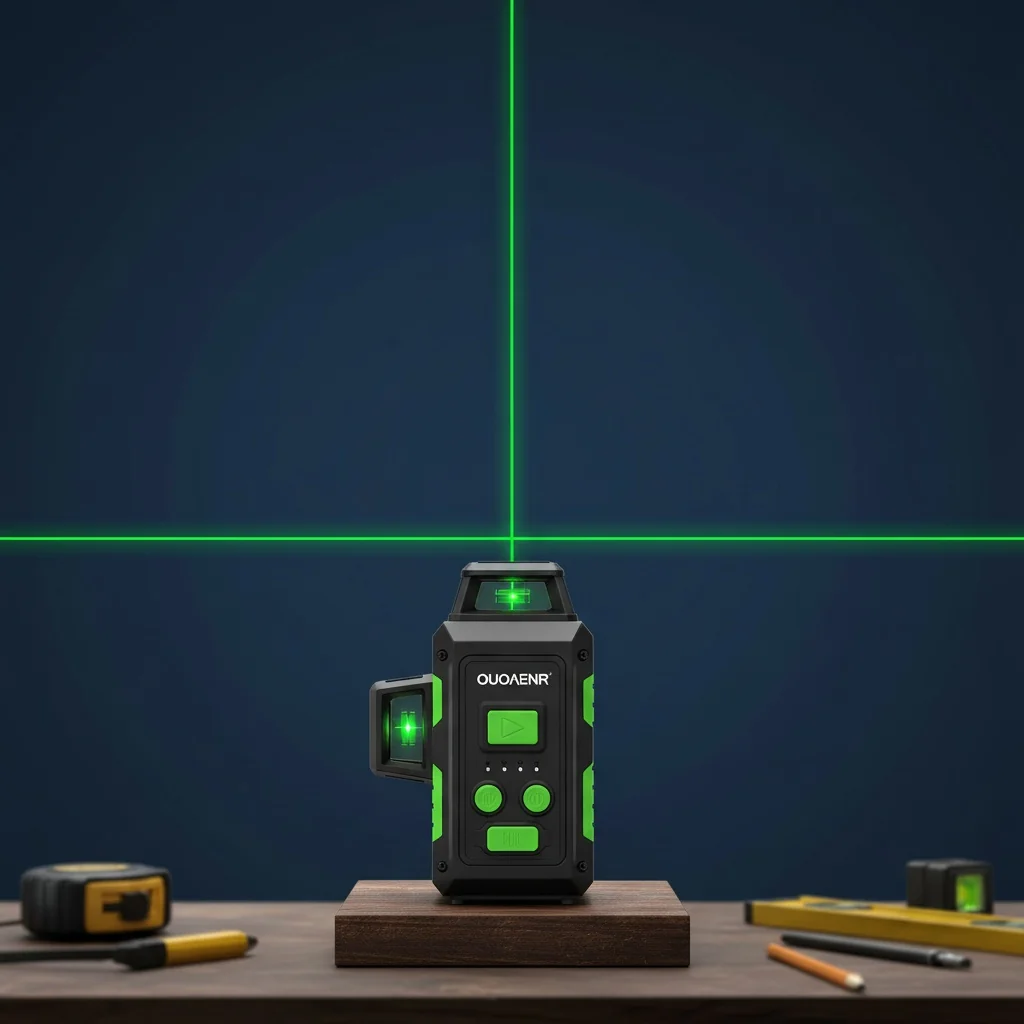
Laser levels sold in the UK must comply with BS EN 60825-1 (Safety of laser products). Most construction lasers are Class 2 or Class 3R. Class 2 is eye-safe for momentary exposure — your blink reflex protects you. Class 3R requires more caution and shouldn't be used where untrained people might look into the beam.
The Health & Safety Executive (HSE) provides guidance on laser use in construction environments. Their key recommendation: always use the lowest class laser that achieves the required result. For 99% of building work, Class 2 is sufficient.
What to Check Before Buying
- CE/UKCA marking — mandatory for UK sale since January 2025
- Class rating label — should be clearly visible on the unit
- IP rating — IP54 minimum for site use (dust-protected, splash-resistant)
- Calibration certificate — professional units should come with one; recalibrate annually
The British Standards Institution (BSI) maintains the standards framework for measuring instruments. If a manufacturer claims ISO 17123 compliance for their accuracy specs, that's a good sign they've been properly tested rather than just quoting optimistic lab figures.
That said — even a perfectly calibrated laser is only as good as your setup. I've seen expensive kit give rubbish results because someone balanced it on a stack of bricks instead of a proper tripod. Hard work and attention to detail matter more than the price tag on the box.
Frequently Asked Questions
What is the difference between a rotary laser level and a cross-line laser?
A laser level spins a single beam 360° to create a level plane across an entire site, working at distances up to 800m with a detector. A cross-line laser projects fixed lines (typically 120°–180° spread) visible up to 15–50m. Rotary units suit outdoor and large-scale work; cross-line lasers like the OUOAENR kit at £88.17 are ideal for interior alignment tasks within a single room.
How accurate is a self-levelling rotary laser level?
Most self-levelling rotary units deliver ±1.5mm accuracy at 30m, which equates to roughly ±0.5mm at 10m. Professional-grade models achieve ±1mm at 30m. This exceeds UK building regulation tolerances for most structural and finishing work. Accuracy degrades with distance — expect ±3mm at 100m even on quality units.
Can I use a rotary laser device outdoors in rain?
Check the IP rating. IP54 handles light rain and dust. IP66 units withstand heavy rain and powerful water jets. For regular outdoor UK use — and let's be honest, it rains here more often than not — IP56 or higher is recommended. Always dry the unit before storage to prevent corrosion of the battery contacts and lens housing.
How often should I calibrate my laser level?
Manufacturers recommend annual calibration for professional use, or immediately after any drop or impact. A simple field check takes 2 minutes: set up at one end of a 30m run, mark the beam height, rotate 180°, and check the mark matches. If it's off by more than 3mm at 30m, send it for professional recalibration — typically £40–£80 in the UK.
Is a green laser level better than red for UK conditions?
Green is approximately 4× more visible to the human eye indoors, making it superior for interior work without a detector. Outdoors, both colours require a detector beyond 30m, so the advantage disappears. Green diodes consume more battery — roughly 30–40% faster drain. For a mixed-use tool, green offers better versatility in 2026's UK market.
What's the best laser level under £300 in the UK?
In the £150–£300 bracket, look for self-levelling units with 200m+ detector range, IP54 minimum, and ±1.5mm/30m accuracy. Brands like Huepar, Dovoh, and Kaiweets offer strong value here. For interior-only work, the OUOAENR green cross-line at £88.17 handles alignment tasks spot on without the rotary premium. Your choice depends entirely on working distance requirements.
Key Takeaways
- A rotary laser level projects a 360° beam accurate to ±1.5mm at 30m — essential for any job over 3m where level matters.
- Self-levelling saves significant time: auto-compensation within ±3°–5° means setup takes under 10 seconds per position.
- SKLP electronic levelling outperforms pendulum systems on vibration-heavy sites, locking in under 3 seconds.
- Green beams are 4× more visible indoors — choose green for interior work, red is fine for outdoor detector use.
- Budget entry points have dropped dramatically: the OUOAENR self-levelling green laser kit costs just £88.17 for interior alignment work in 2026.
- IP rating matters in UK conditions: IP54 minimum for site use, IP66 for regular outdoor exposure.
- Annual calibration is non-negotiable for professional use — a 2-minute field check catches drift before it causes costly rework.
Need a precision laser level for your next job?
Free UK delivery · 30-day returns · Accurate to ±3mm · From £88.17
View OUOAENR Green 360° Laser Level — £88.17